

How to choose useful film and TV comps
Choose film and television comps by the decision they support. Separate story, audience, production, and buyer comparisons, then state where each analogy stops.
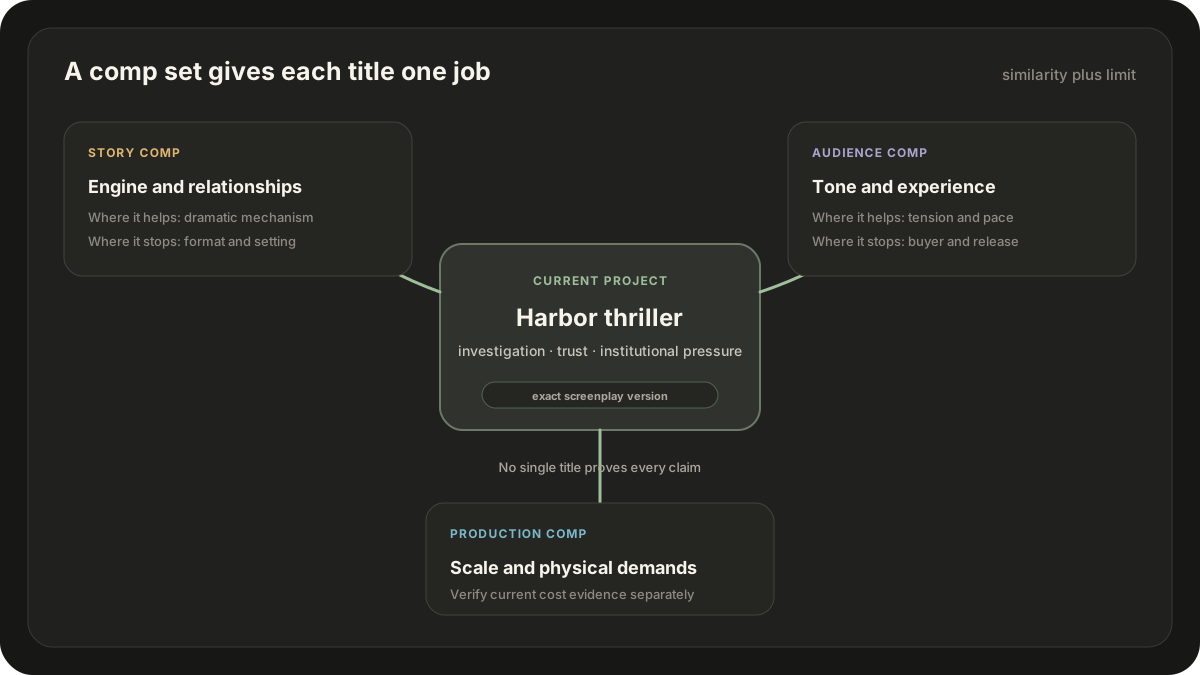
Film and TV comps are existing works used to explain one useful similarity to a project. A good comp might clarify story engine, tone, audience, production shape, buyer context, or another specific decision. It should also make the important differences visible.
Do not ask one title to prove that a project will be creatively successful, inexpensive to produce, easy to sell, and commercially valuable. Those are different claims that require different evidence. Use a small comp set, give each title one job, and state where the analogy ends.
Start with the decision
Choose comps after naming who needs them and what they must decide.
| Reader | Decision | Useful comp question |
|---|---|---|
| Writer | Clarify the project's promise | What existing work shares the central engine, tone, or audience experience? |
| Development team | Evaluate execution and fit | What title creates a useful comparison for structure, character, format, or mandate? |
| Producer | Frame the production approach | What completed work shares relevant scale, locations, cast pattern, or technical demands? |
| Representative | Position a conversation | Which references communicate the material quickly without flattening its distinct value? |
| Finance or sales specialist | Test a market assumption | Which released works are comparable under current, verified financial, territorial, and distribution evidence? |
The last row requires specialist data and context. A story resemblance alone does not support a revenue forecast.
Use four separate comp lenses
1. Story and character comps
These compare premise, dramatic engine, protagonist, relationships, structure, genre, or point of view. They help explain how the project works on the page.
For a harbor-conspiracy screenplay, Dark Waters might help describe procedural persistence against an institution. Mare of Easttown might help discuss a female investigator whose community relationships complicate the case. Neither comparison means the project has the same format, scale, audience, or commercial path.
Before choosing a story comp, complete a screenplay analysis and identify the actual engine. “Both are thrillers” is too broad. “Both make the investigator's closest relationship part of the institutional opposition” is a claim someone can inspect.
2. Tone and audience-experience comps
Tone comps explain what it may feel like to watch the project: tense or contemplative, intimate or expansive, comic or severe, procedural or subjective.
Tone is not a list of adjectives. Point to mechanisms such as pacing, information control, visual scale, violence, humor, or the distance between the audience and protagonist. A useful comparison can share an experience even when the plots differ.
3. Production-shape comps
Production comps may help frame location concentration, cast scale, period requirements, action, effects, travel, night work, episode pattern, or another physical-production dimension.
Use current, trustworthy sources before attaching numbers. Publicly reported budgets often use inconsistent definitions, omit incentives or reshoots, and may not match the production version being discussed. Treat a comp as an input to a Finance Plan, not a substitute for a schedule, bids, deals, or production-accounting review.
4. Buyer, platform, and release comps
These comparisons depend on current mandates, territories, rights, release strategy, and timing. A title acquired several years ago under a different market condition may not describe today's buyer context.
Separate verified facts from inference. “The same platform released both titles” is a fact. “The platform will want this project” is a prediction. A comp can frame a question for a representative, producer, financier, or sales specialist without answering it.
Build a three-title comp set
A compact set is easier to defend than a long list. Give every title a distinct role:
- Primary story comp: closest match for the dramatic engine or character relationship.
- Audience or tone comp: clearest reference for the viewing experience.
- Production or positioning comp: useful reference for scale, format, or the business question under review.
One title can fill two roles when the evidence supports it, but do not hide a weak comparison by stacking famous names.
A practical comp worksheet
For each candidate, record:
| Field | What to write |
|---|---|
| Comp title and format | Film, limited series, returning series, or other format |
| Comparison job | Story, character, tone, audience, production, buyer, or release |
| Specific similarity | One evidence-led sentence |
| Important difference | The limit of the analogy |
| Source | Screenplay evidence or current external source supporting the claim |
| Decision | What this comparison helps the reader decide |
Then remove any comp that duplicates another without adding a clearer dimension.
Worked example
Assume the project is a present-day feature thriller about Mara, a port investigator who discovers that her trusted partner is tied to falsified cargo records.
| Comp | Job | Useful similarity | Important difference |
|---|---|---|---|
| Dark Waters | Story engine | An investigator follows evidence through institutional resistance | It is a legal drama based on real events, not a fictional port thriller |
| Mare of Easttown | Character and community | The investigation is inseparable from the protagonist's local relationships | It is an episodic murder mystery with a different scale and engine |
| Michael Clayton | Tone and positioning | Adult conspiracy storytelling built around compromised professional relationships | Its corporate and legal world implies different locations, cast, and production needs |
The set does not claim that the project will perform like those works. It gives three readers a faster way to understand different aspects of the material.
Common comp mistakes
- Using only blockbusters. Fame does not make a title comparable.
- Combining plot summaries. “Title A meets Title B” is useful only when each half has a defined job.
- Ignoring format. A feature, pilot, limited series, and returning procedural create different structural and production expectations.
- Treating genre as enough. Two thrillers can have different engines, audiences, and costs.
- Using a story comp as a financial forecast. Creative similarity does not establish revenue, budget, or buyer demand.
- Hiding the differences. A comp becomes more credible when its limit is explicit.
- Letting the set go stale. Revisit market-facing comps when the project, mandate, or external context changes.
Keep comps tied to the current draft
The strongest comp for an early draft can become misleading after a structural rewrite. If the protagonist changes, the investigation becomes an ensemble, or the scale expands across countries, update the comp set.
Use a character breakdown to test relationship claims, a beat sheet to test the story engine, and a draft comparison to identify which positioning statements became stale.
Prescene does not turn a title resemblance into a prediction. It keeps the screenplay's scenes, characters, relationships, production elements, and versions available so a writer or development team can inspect the evidence behind a comparison. External performance, rights, buyer, and financial research still requires current sources and accountable human judgment.
Ground the comparison in the screenplay
Prescene helps you inspect the premise, characters, scenes, locations, and version behind a project-positioning claim.