

How to purchase film and TV adaptation rights
A practical diligence framework for options, purchases, chain of title, scope, closing documents, and the questions an entertainment attorney should resolve.
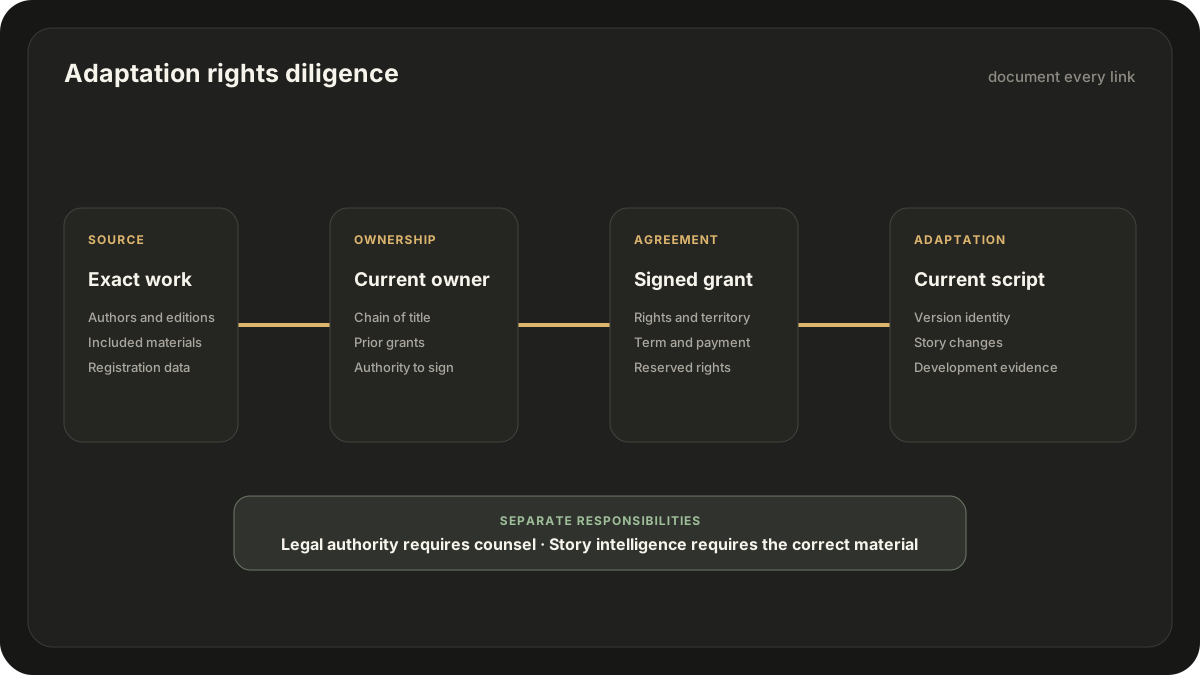
Acquiring film or television adaptation rights means obtaining a documented grant from the person or entity that controls the rights you need. Before paying for an option or purchase, identify the exact source work, verify the current owner and chain of title, define the rights and territory, and have an entertainment attorney document the transaction.
An option, purchase, shopping agreement, release, or other contract can allocate very different rights and obligations. The name on the first page is not enough. The signed language, ownership history, applicable law, guild obligations, and facts of the project control.
Option, purchase, and shopping arrangements
These structures are often discussed together, but they do different jobs.
| Structure | General function | Questions to resolve |
|---|---|---|
| Option | Gives a party defined exclusive rights for a limited period, usually with a method for acquiring the underlying rights | Term, extensions, exclusivity, exercise procedure, purchase terms, development activity, and reversion |
| Purchase or assignment | Transfers the rights described in the agreement | Exact rights conveyed, reserved rights, payment, contingent compensation, credit, warranties, and continuing obligations |
| Shopping agreement | Authorizes limited efforts to present or set up a project without necessarily transferring the same rights as an option | Exclusivity, permitted contacts and activities, term, approvals, compensation, and what happens if interest is found |
There are many variations. Do not assume that a short agreement, email, certificate, or payment creates the rights needed to develop and exploit a screen project.
1. Define the source work
Identify the exact material before discussing the deal:
- title, author, edition, publication status, and registration information if available;
- whether the project is based on a book, article, screenplay, podcast, life story, photograph, archive, or several sources;
- coauthors, illustrators, translators, editors, publishers, estates, employers, or other contributors;
- incorporated material such as letters, lyrics, artwork, clips, interviews, or third-party characters; and
- the adaptation already in development, including its title and current screenplay version.
Owning one element does not necessarily grant rights in every element packaged with it.
2. Identify the current owner
Under U.S. law, copyright initially vests in the author or authors, subject to rules including works made for hire. Copyright interests may later be transferred in whole or in part. 17 U.S.C. § 201 describes initial ownership, work-made-for-hire ownership, and divisibility of exclusive rights.
Ask for documents supporting the seller's authority. A copyright registration, publisher credit, company name, or possession of a manuscript can be useful evidence, but no single item should replace chain-of-title review.
Potential ownership questions include:
- Was the work created by employees, contractors, collaborators, or joint authors?
- Did an earlier publishing, agency, option, production, or distribution agreement grant relevant rights?
- Has the work or company changed hands?
- Is an estate, lender, trustee, or successor involved?
- Are any grants subject to termination, reversion, approval, or encumbrance issues?
3. Build the chain of title
Chain of title is the documented history connecting the original owner to the party offering the rights. A practical diligence file may include:
- authorship and work-made-for-hire agreements;
- assignments, exclusive licenses, options, extensions, amendments, and releases;
- publisher reversion or reservation documents;
- corporate acquisition or succession records;
- copyright registrations and recorded documents;
- contributor permissions and underlying-material licenses;
- termination, lien, security-interest, litigation, or claim information; and
- written confirmation of any expired or released prior grant.
Review gaps before treating them as administrative details. A missing link can affect financing, distribution, insurance, or the ability to exploit the project.
4. Use a signed written instrument
For transfers governed by U.S. copyright law, 17 U.S.C. § 204 generally requires a writing signed by the owner of the rights conveyed or the owner's authorized agent. The agreement should identify the parties, work, rights, and operative grant with enough precision for the transaction.
Do not rely on an informal understanding to fill a material gap. Have counsel confirm signature authority, entity names, dates, exhibits, and delivery requirements.
5. Define the scope of the grant
The agreement should answer what the buyer or option holder may do and what the owner keeps. Depending on the project, counsel may address:
- film, television, streaming, and other audiovisual rights;
- remake, sequel, prequel, spinoff, series, and ancillary rights;
- territory, language, media, term, and exclusivity;
- promotional, advertising, merchandising, publishing, soundtrack, stage, interactive, and other rights;
- reserved rights and holdbacks;
- approvals, consultations, and creative controls;
- title, name, likeness, biography, archive, and access issues;
- credit, compensation, accounting, and audit provisions; and
- assignment, sublicensing, financing, and distribution needs.
A broad label such as “film rights” may not answer the questions the project will face later.
6. Make the option mechanics executable
For an option structure, document how the option starts, extends, and is exercised. Check dates, notice addresses, payment mechanics, delivery requirements, and the relationship between the option and purchase terms.
Counsel should also address what development activity is permitted during the option, who owns or may use materials created during the period, and what survives or reverts if the option expires.
7. Review warranties, claims, and continuing obligations
Representations, warranties, indemnities, releases, insurance requirements, and remedies allocate risk. They do not prove that a claim cannot arise.
Ask counsel to review known disputes, similar works, defamation or privacy issues, rights of publicity, confidential sources, and any third-party material. Projects involving real people or events require separate analysis. Facts themselves are not protected in the same way as expression, but that does not eliminate contract, privacy, publicity, defamation, access, or clearance issues.
Applicable guild or union agreements may also affect writing services, credits, residuals, and assumptions when rights or a motion picture transfer. Confirm the agreements and production circumstances rather than relying on a generic checklist.
8. Consider recordation and closing
The U.S. Copyright Office accepts qualifying transfers and other documents for recordation. Recordation is voluntary, but the Copyright Office explains that it can provide legal advantages under specified conditions, including issues involving constructive notice and priority between conflicting transfers. Current procedures are available through the Copyright Office Recordation System.
At closing, confirm that every required document, signature, payment, exhibit, notice, consent, and delivery has been completed. Store the final executed set and a clear rights summary. A summary is useful for operations, but the signed agreements remain controlling.
A practical diligence checklist
Before committing funds or presenting the project as controlled, ask whether the file contains:
- the exact source work and all material incorporated into it;
- evidence of original and current ownership;
- a complete chain of title with prior grants resolved;
- a signed agreement from a party with authority;
- an explicit grant covering the intended format, territory, term, and uses;
- clear reserved rights, approvals, credits, and payment terms;
- executable option, extension, exercise, and reversion mechanics;
- contributor, life-story, archive, music, image, and other permissions where applicable;
- current guild, union, insurance, privacy, publicity, and clearance review; and
- final closing documents, recordation decisions, calendars, and responsible owners.
Keep rights work separate from story intelligence
Prescene is not a rights registry, ownership-verification service, clearance opinion, or substitute for legal diligence. Its current role begins with the material: keeping scripts and versions organized, comparing drafts, and helping development teams inspect how an adaptation changes characters, scenes, relationships, and structure.
That distinction matters. A team can understand an adaptation deeply and still lack the rights to produce it. It can also control the rights while working from the wrong draft. Treat legal authority and story intelligence as connected operational responsibilities with different owners and evidence.
Important legal note
This U.S.-focused guide provides general educational information. It is not legal advice and does not create an attorney-client relationship. Rights ownership, transfers, contracts, guild obligations, privacy, publicity, defamation, clearance, insurance, and recordation questions depend on the specific work, parties, agreements, jurisdiction, and production. Consult a qualified entertainment attorney before acquiring, relying on, financing, selling, or exploiting adaptation rights.
Keep the adaptation tied to the source
Prescene can help a development team compare screenplay versions and inspect how characters, scenes, and relationships changed during adaptation.