

AI vs. human script coverage: where each fits
AI and human coverage solve different parts of the reading problem. Compare speed, consistency, context, judgment, and the workflows that combine them.
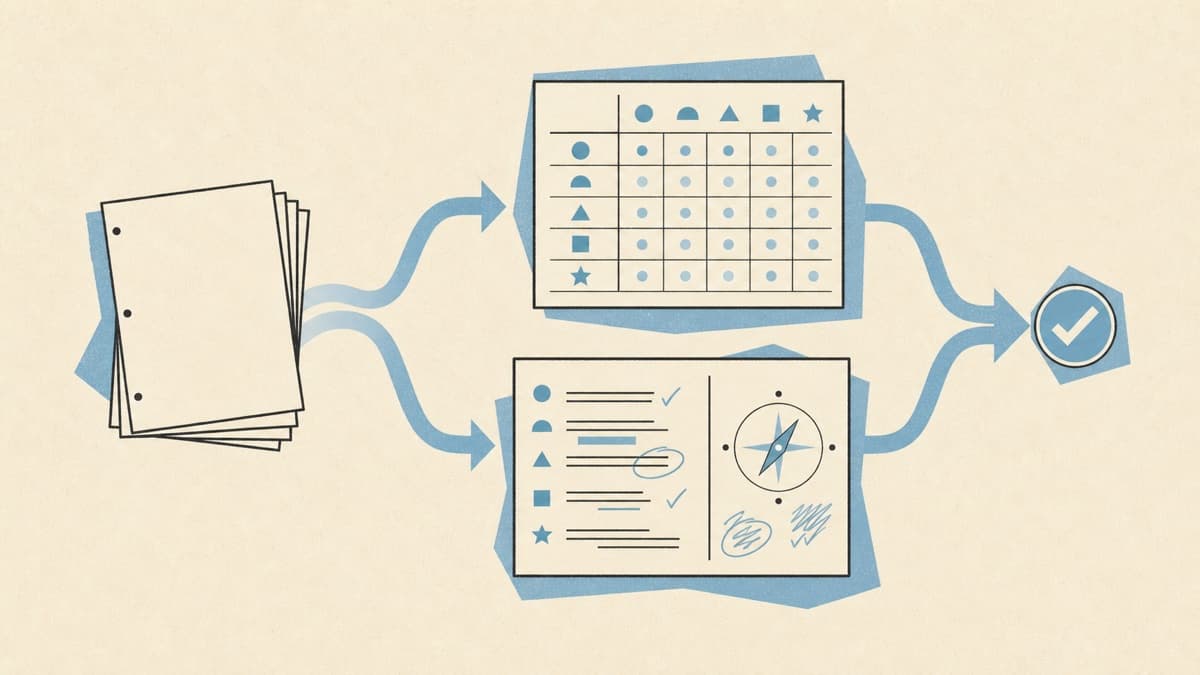
AI script coverage is fast and repeatable. Human coverage brings taste, context, accountability, and lived experience. Neither description settles which one a team should use.
The useful question is: what decision are you preparing to make? A writer checking a new draft, a producer triaging submissions, and a studio deciding whether to acquire a project do not need the same process.
The comparison at a glance
| Dimension | AI coverage | Human coverage |
|---|---|---|
| Turnaround | Varies with script length and demand | Varies with reader availability and depth |
| Marginal volume | Can process a large queue without adding readers | Requires more reader time as volume grows |
| Rubric consistency | Can apply the same requested structure repeatedly | Requires calibration across readers |
| Taste and cultural context | Limited by the model and instructions | Draws on a person's experience and point of view |
| Buyer context | Knows only the context it is given | Can understand relationships, strategy, and unwritten priorities |
| Accountability | A tool does not own the decision | A reader or executive can defend and revise a judgment |
| Follow-up | Can answer questions about the analyzed material | Can discuss interpretation, politics, taste, and next steps |
| Best role | Structured first pass and evidence retrieval | High-stakes judgment and creative conversation |
This table describes tendencies, not guarantees. A rushed human report may be less useful than a careful automated one. A polished AI report can still misunderstand a scene or overstate a conclusion.
Where AI coverage is useful
Preparing a high-volume queue
When a team receives more material than its readers can cover promptly, a structured first pass can make the queue visible. Summaries, scorecards, and scene-grounded questions help the team decide what needs a human read first.
This works best as triage, not automatic rejection. If an AI verdict silently removes a script from consideration, the process has turned a tool limitation into company policy.
Checking a draft before a human read
A writer can use an AI report to catch a confusing synopsis, an underdeveloped relationship, or a pacing question before asking a trusted reader for time. The later human conversation can focus on the choices that require taste.
Applying a stable rubric
Development teams often want every first read to answer the same questions. An AI system can apply a defined report structure without reader fatigue. The team should still audit outputs and revise the rubric when it produces the wrong emphasis.
Retrieving the evidence behind a note
A note is easier to evaluate when the reader can inspect the relevant scenes. A coverage system connected to the source can help a user move from a score to the screenplay evidence behind it.
Where human coverage remains essential
Taste and voice
A distinctive screenplay may break structural expectations for a good reason. Human readers can recognize confidence, originality, cultural specificity, or a performance opportunity that does not reduce cleanly to a rubric.
Company and relationship context
A producer may know that a director is looking for a particular kind of project. A representative may understand what a client is ready to rewrite. A studio executive may recognize that a strong script duplicates something already in development. These facts are often absent from the screenplay and should not be guessed.
High-stakes decisions
Acquisition, representation, staffing, financing, and greenlight decisions affect people and money. A person should own the judgment, inspect the material, and be able to explain the decision.
Creative conversation
Good development is not a list of detected problems. It is a conversation about intention, tradeoffs, and the version of the project worth pursuing. A human collaborator can negotiate those choices with the writer.
Three workable hybrid models
AI first pass, human decision
Run the full queue through one rubric. Use the reports to prioritize reads and prepare questions. Require a person to read any script before a consequential decision.
Human read, AI evidence layer
Let the reader form an independent view first. Then use the script's structured intelligence to verify scene order, character appearances, version changes, or other details that are easy to misremember.
Two independent reads
Have a human reader and an AI system evaluate the same material without seeing each other's conclusion. Compare where they agree and disagree. The disagreement often reveals the question worth discussing.
How to choose
Use the lowest-cost process that matches the risk of the decision.
- For private draft exploration, an AI first pass may be enough.
- For submission triage, combine a stable rubric with human review rules.
- For a client conversation, use the report as preparation and bring personal context.
- For acquisition or representation, read the screenplay and make the decision accountable to a person.
AI coverage is most useful when it creates more room for judgment. It is least useful when a team treats a fast answer as a final one.
Before adopting a product, apply the same screenplay and decision to the AI coverage-tool evaluation framework. Teams that need a shared report structure can begin with the script coverage template.
Add a structured first read to your process
Run Prescene Coverage on one screenplay, inspect the rationale, and decide where human judgment should enter next.