

The story layer for film and television
Prescene turns screenplays into structured story context that carries the writing into every creative and production tool that follows.
The better AI gets at generating video, the more important the screenplay becomes.
Every advance in filmmaking technology has given storytellers new ways to bring an idea to the screen. Generative AI may be the largest leap yet. But better-looking videos do not create better stories.
Stories begin with something human: a point of view, a character, a choice, something worth saying. In film and television, that thinking takes shape in the screenplay.
For the last three years, we have been building AI tools for screenplays. We started with outputs: script coverage, character breakdowns, and tools for asking questions about a draft. They all depended on the same underlying work: understanding the story.
Coverage needs to understand the plot, characters, and structure. A schedule needs to understand the scenes, locations, and cast. A generative tool needs to understand the world, characters, and intent. These are different applications of the same story.
Today, that understanding is rebuilt from scratch in every tool, conversation, and workflow. We believe the screenplay should become the shared story layer beneath all of them.
That is the idea behind Prescene.
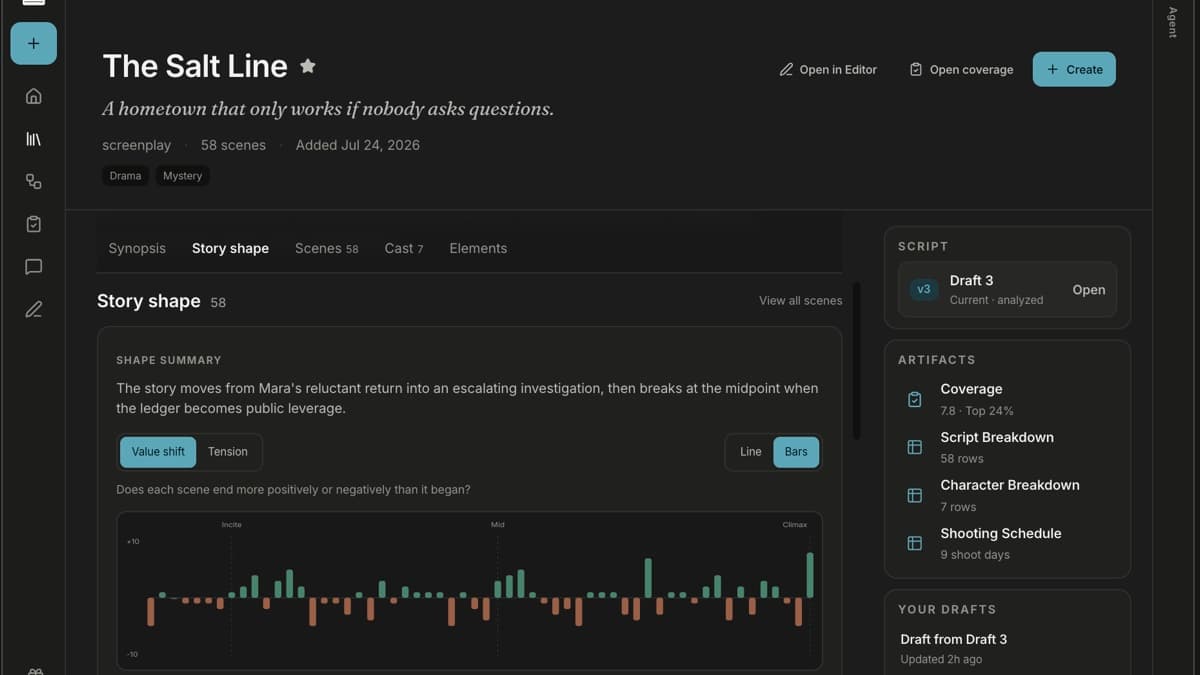
Prescene turns a screenplay into a structured understanding of the story that software can use and people can verify. Add a new draft, and Prescene shows what changed on the page and how those changes affect the story. Add episodes, and Prescene follows characters, relationships, and storylines across a season or an entire series. Ask a question, and Prescene points to the scenes behind the answer.
That same story context powers Coverage, version comparisons, breakdowns, schedules, and workflows your team creates inside Prescene. Through MCP and the API, other creative and production tools can work from it too.
Prescene's job is simple: carry the intent in the writing into every tool that follows.
Start with a screenplay
Add a script to Prescene and build a structured understanding of its scenes, characters, relationships, locations, and story threads.